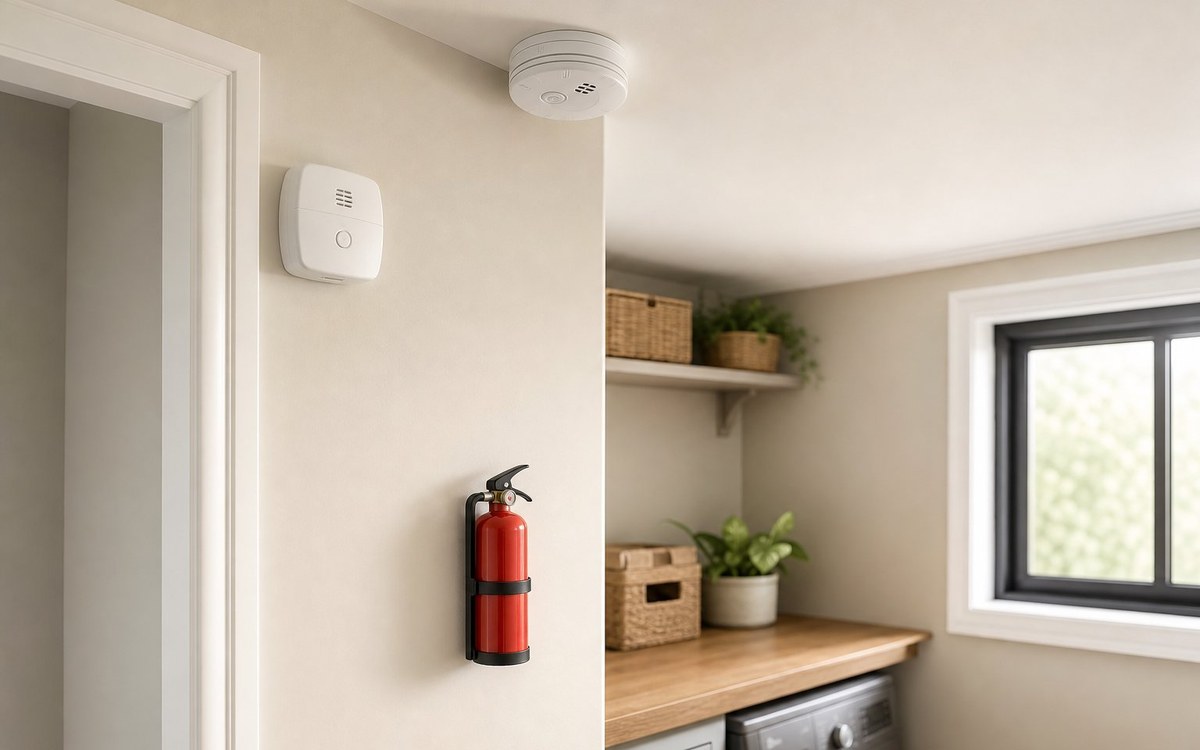
Home safety is rarely about one dramatic device. It is a series of small decisions — a lock that is actually used, an alarm that is actually tested, a hallway that stays clear at night — made in the order that risk arrives.
The most useful way to review your home's safety is to walk it the way an intruder or a fire would. Start at the boundary, work inwards through each room, and finish with the plan everyone in the household can recite without looking it up.
Start at the perimeter
Most opportunistic crime begins with a casual assessment from outside. Look at your home at night, ideally from the street. What can be seen into? Where is it too dark to see out? Are there obvious handholds — a wheelie bin under a window, a trellis beside a flat roof, a side gate that stays unlocked?
Practical perimeter measures do not have to look like a compound. Motion-triggered lighting that surprises without blinding, trimmed planting that keeps sightlines open, and a gate that latches properly all reduce opportunity without altering your street frontage. Consider lighting that comes on to a schedule as well as on movement, so the house does not sit entirely dark when you are away.
Entry points
Walk each external door and think in terms of delay. A lock that buys time is what matters. Fit deadbolts that meet current guidance, use door chains or limiters, and make sure the door itself and its frame are solid — a superb lock in a flimsy frame is an invitation.
Smart locks are genuinely useful, particularly for households with comings and goings, but they must be configured properly: a unique code per person, temporary codes removed when they are no longer needed, and automatic locking enabled where it makes sense. Keep a physical key route available in case of a flat battery.
Sliding doors and ground-floor windows need secondary locking. A video doorbell helps you see who is at the door before opening, and it is worth positioning so it captures faces rather than the top of a delivery box.
Hallways and stairs
The hallway is where two kinds of risk overlap: it is the escape route in a fire, and often where keys are left within reach of the letterbox. Fit a heat or smoke alarm near the top of the stair, keep the stair clear of shoes, bags and buggy clutter, and move keys and wallets away from the front door.
Night lighting matters here. Low-level plug-in lights or a light that comes on automatically make it far easier to move quickly if you are woken by an alarm.
The kitchen
The kitchen carries the highest fire risk in most homes, and most incidents start with distraction: something left on the hob, a tea towel beside a burner, an empty pan heating up. Keep a fire blanket and a suitable extinguisher where you can reach them without stepping over the cooking area, and never place them behind a door that could be pulled closed.
Test smoke alarms regularly and pay attention to nuisance alarms — moving a device slightly is better than disabling it. If you have a chip pan habit or use a lot of hot oil, reconsider; these are the incidents most likely to escalate quickly.
Smart shut-off devices for hobs, heat sensors in kitchens and interlinked alarms give an extra layer of safety, particularly in busy households or where someone lives alone.
Bedrooms
Keep the escape route from each bedroom clear, including the landing outside it. A smoke alarm in the hall is essential; adding a heat alarm or a second detector can help in larger homes, and interlinking means one alarm wakes the whole household.
Know how to open and use any window that could serve as an escape, including night vents and restrictive hinges. If the hinge limiters were fitted for child safety, make sure adults know how to release them.
Utility rooms and garage
These are the rooms where heat sources, appliances, batteries and fuel are most likely to gather. Keep a fire extinguisher close, avoid stacking boxes around the boiler or electrical panel, and make sure smoke or heat alarms cover these spaces where they connect directly to the home.
Battery chargers for tools, cycles and e-scooters deserve particular care. Charge on a hard, non-combustible surface, avoid overnight charging where possible, and never charge in the only exit route from a room.
Garden and outbuildings
Sheds and garages often hold tools that help an intruder, and their doors are often weaker than the house's. Use a good padlock and a hasp, keep ladders locked away, and avoid leaving bins where they can be used as steps. Outdoor lighting on both movement and schedule is worth the small effort.
If you have outbuildings with power, consider a heat or smoke alarm there too if the wiring, appliances or a car charger could be a source of ignition.
The plan everyone knows
Choose a meeting point outside the house that everyone can reach without crossing the front of the property. Talk through the plan, including what to do if the stairs are blocked and which window is the alternative. Keep the plan brief enough to remember, and practise it comfortably often enough that it does not feel alarming to children.
Record the alarm test in whatever way your household will actually check — a note on the fridge is more effective than a good intention. Replace alarm sensor heads on schedule, and check that interlinking still works after any electrical work in the house.
Habits that outlast equipment
Equipment helps, but routine is what protects a home: locked doors at night, keys not visible, alarms tested, cluttered escape routes cleared, candles never left burning in a room you have walked out of. Review the routine each time the household changes — a new pet, a child now old enough to open the front door, an older relative moving in.
If you would like a second opinion, our safety and security team can walk the property with you, check the placement of alarms and locks, and put the findings in writing so nothing depends on memory.