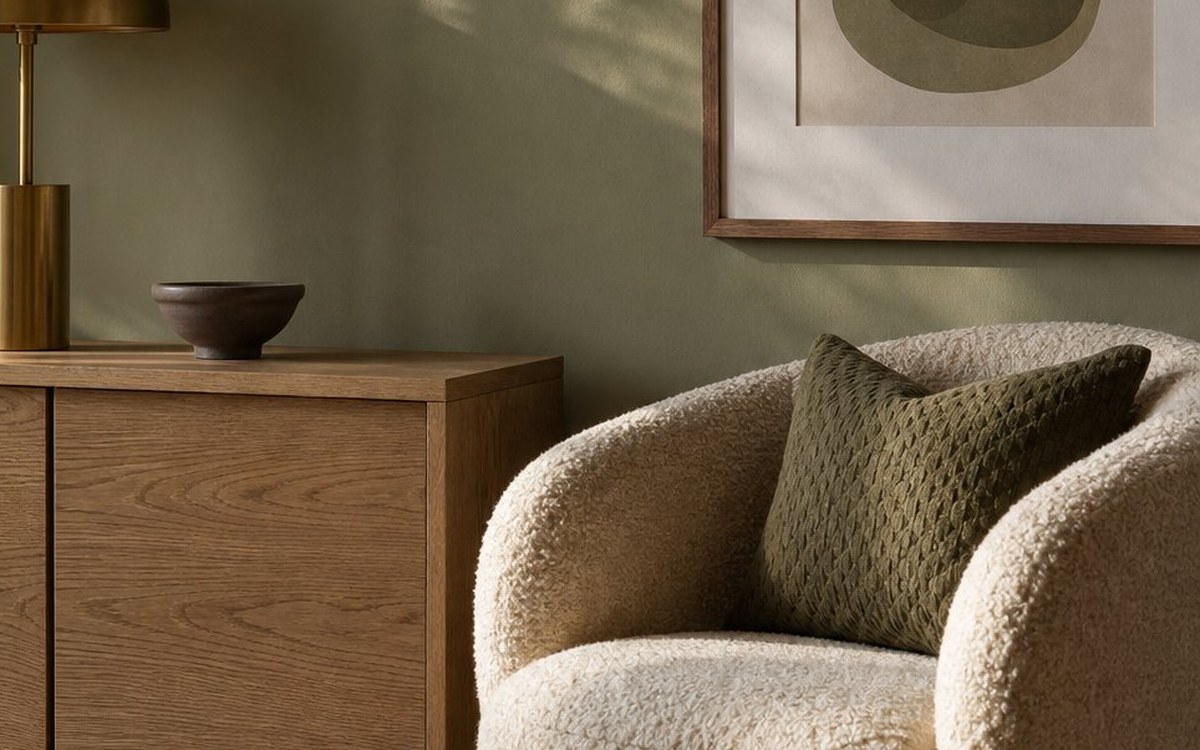
Minimalism earned a reputation for feeling like a showroom: white walls, hard edges, nowhere to put a cup down. Warm minimalism keeps the calm but adds the things that make a room feel lived in — texture, timber, soft light and a little imperfection.
If you have been renovating for a while, you will have noticed the shift. The all-white rooms of the last decade are being repainted in clay, mushroom and soft olive. Furniture has softened. Surfaces have become tactile. What has not changed is the restraint — and that restraint is the part people find hardest to get right.
What warm minimalism actually means
Minimalism, at its core, is not a colour scheme. It is a decision about how much a room needs to hold in order to work well. Warm minimalism keeps that discipline but swaps austerity for comfort. Fewer things, chosen better, in materials that age rather than date.
In practice it looks like this: one great chair instead of four adequate ones, a wall left deliberately empty, timber that shows its grain, and lighting arranged in layers so the room can change mood through the day. The warmth comes from material and light. The calm comes from editing.
Start with light and circulation
Before choosing a single finish, watch how daylight moves through the space. Where does it land in the morning? Which corner stays dim all afternoon? Warm minimal interiors depend on light, so begin by protecting it: keep window reveals simple and pale, avoid heavy window treatments, and resist the urge to block a doorway with furniture.
Then look at how you move. A room that makes you take a careful route around a console table will never feel restful, however beautiful the console is. Walk the room as you would on an ordinary weekday — with a mug in one hand and a bag in the other — and edit whatever gets in the way.
Let texture do the talking
When there is less colour contrast, texture becomes the main event. That is why warm minimalist rooms often combine a rough lime plaster wall with smooth joinery, a boucle armchair with a linen sofa, oak with stone. The eye finds interest in the surface changes instead of in decorative clutter.
A workable rule for a room is to aim for contrast in more than one material per sightline. A plaster wall against an oak shelf. A wool rug against a smooth concrete floor. It reads as considered rather than empty.
Texture without clutter
- Build around natural materials that mark honestly when they wear
- Combine one rough surface, one smooth surface and one soft surface per room
- Let large items carry the texture — rugs, seating, window dressings — rather than many small ones
- Use matte finishes; they absorb light and soften a room far more than gloss does
Choose a palette that ages well
The safest warm palette is built from surfaces you already have. Take the tone of your flooring, then pull paint colours from it rather than against it. Warm neutrals — clay, oatmeal, mushroom, putty, soft olive — give the room a gentle base that cooler objects can sit against.
Resist the temptation to paint everything in one tone. A little tonal shift between walls, ceiling and trim gives the room depth without introducing contrast. Colour that follows the architecture will outlast any trend, and it is far easier to live with when the light is poor in the middle of winter.
Storage is the quiet hero
Calm rooms usually conceal their storage. Built-in joinery, deep drawers under seating, a bench with a lift-up lid, a hallway cupboard that actually swallows a coat — these are the decisions that keep surfaces clear once life resumes.
If a renovation budget is limited, spend a little more on storage than on statement pieces. More often than not, the object you buy to solve a storage problem is the object that makes a room feel crowded.
Where warm minimalism goes wrong
The most common mistake is interpreting warm as beige. An entire room in similar light neutrals can flatten rather than soothe, especially in weak daylight. Without a third material or a deeper tone to ground it, the space reads as unfinished.
The second mistake is buying to the aesthetic rather than to your life. A low, deep linen sofa is beautiful until every visit by a grandparent requires a plan. Choose comfort first, then let the materials carry the style.
The third is skimping on lighting. Warm minimalism lives or dies by its lighting design. If the only option in the evening is a central ceiling light, the room will always look harsher than the photographs you fell in love with.
A sensible way to begin
Start with one room and one wall. Choose the wall you look at most and treat it properly: a good paint finish, a simple shelf or a single piece of art. Live with it for a while before choosing the next layer. Warm minimalism is a process of patient editing rather than a shopping list, and the rooms that work best usually show the evidence of that patience.
If you would like help translating the idea into a layout, a lighting plan and a material palette that suits your home, our interiors team is happy to walk the space with you.